Hachimantai은(는) Japan에 위치하며 해발 1613 m입니다, Asia.
이 봉우리는 Shield Volcano으로 분류됩니다.
해발 고도
1613 m
독립 높이
— m
좌표
39.957500, 140.853611
유형
shield_volcano
On this page
해발 고도 비교
화산
이 산에 대하여
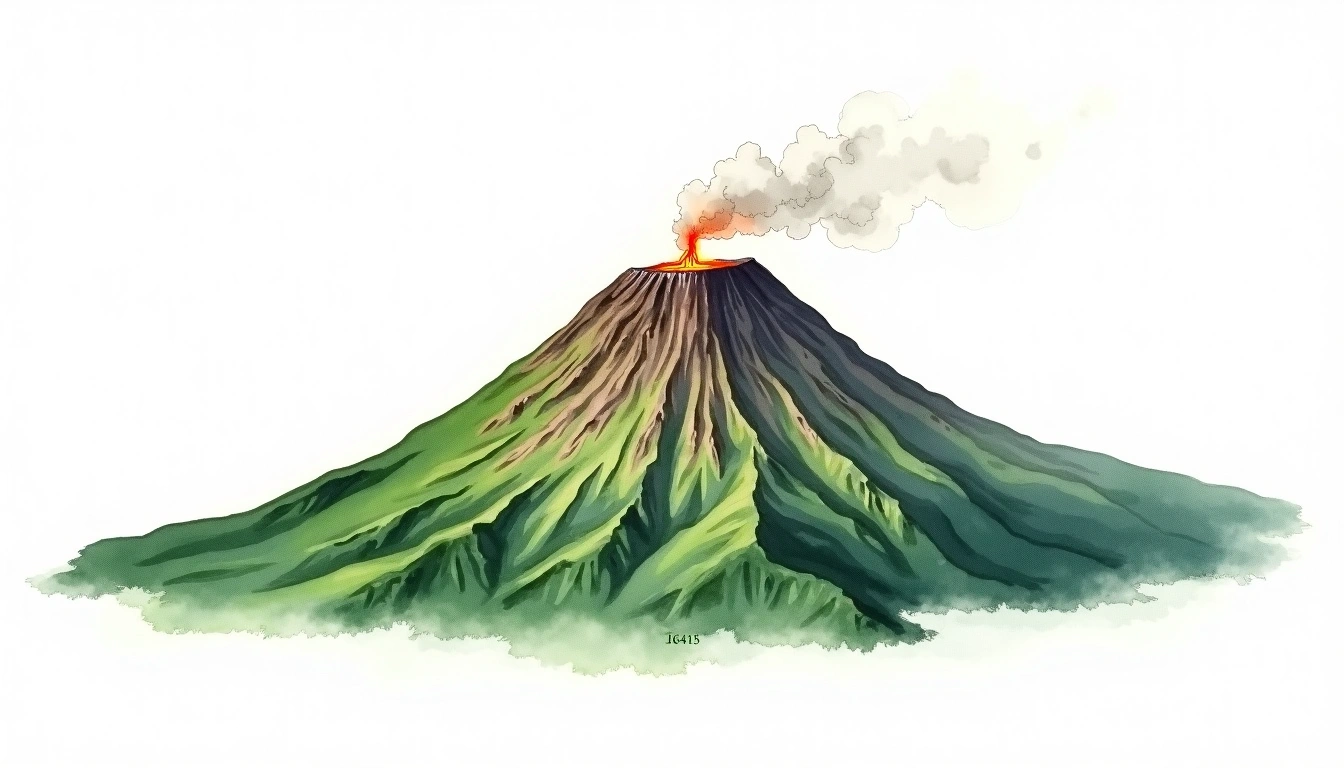
Hachimantai (1613m) is a shield volcano in Japan, Japan. Grade 1/5: accessible hike with popular trails suitable for beginners. Its broad shield form reflects effusive volcanic activity over geological time. Clear trails and gentle slopes attract hikers of all experience levels.
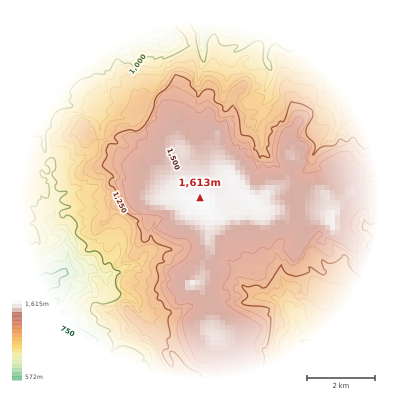
The topographic contour map of Hachimantai (1613m) shows widely spaced, gently curving contours reflecting broad, low-angle slopes. Contour lines are drawn at 50m intervals, with index contours (thicker lines) every 250m. The hypsometric color scale ranges from green (lower elevations) through yellow and orange to white (highest elevations near the 1,613m summit).
고도 프로필
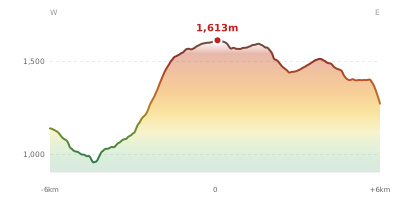
The east–west elevation profile of Hachimantai (1613m) shows the terrain cross-section through the summit at 1,613m. The color gradient transitions from green (valley floor) to white (summit zone), with the red summit marker indicating the peak.
Frequently Asked Questions
The contour map uses a hypsometric color scale where green represents lower elevations, yellow and orange indicate mid-range altitudes, and white marks the highest zones near the summit. Thicker contour lines (index contours) are drawn at wider intervals to help you quickly estimate elevation.
The contour map of Hachimantai (1613m) uses a 50m contour interval. This means each line represents a 50m change in elevation. Closely spaced contours indicate steeper terrain, while widely spaced contours show gentler slopes.
The elevation profile is a cross-section through Hachimantai (1613m) from west to east, passing through the summit at 1,613m. It reveals the mountain's shape, steepness, and relative height compared to the surrounding terrain. The horizontal axis shows distance in kilometers from the peak.
Hachimantai (1613m) is a shield volcano, built almost entirely from fluid lava flows. The contour map shows widely spaced lines, reflecting slopes that rarely exceed 5–10 degrees — much gentler than a stratovolcano.