Monte Olivia位于Argentina,海拔1316米, 属于Patagonian Andes, South America.
该山峰被归类为Fold Mountain。
海拔
1316 m
相对高度
— m
坐标
-54.826944, -68.383056
类型
fold_mountain
On this page
海拔对比
关于这座山
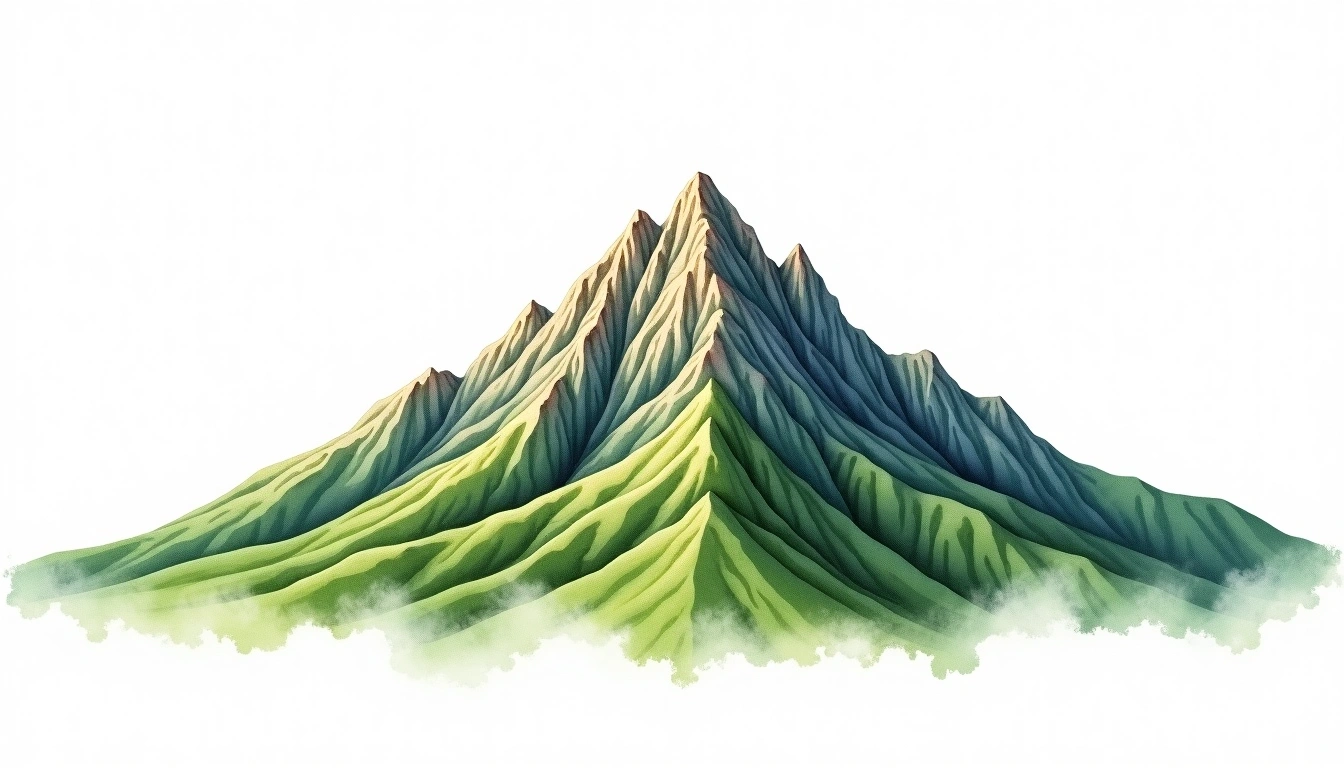
Monte Olivia (1316m) is a fold mountain in the Patagonian Andes, Argentina. Grade 4/5: technical ascent requiring mountaineering skills. A significant Andean peak offering panoramic views across highland valleys and snowfields.
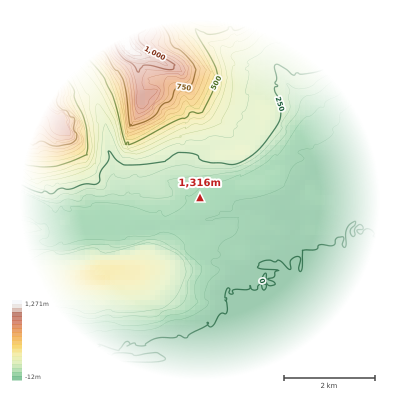
The topographic contour map of Monte Olivia (1316m) in the Patagonian Andes shows elongated parallel contours following the ridge axis. Contour lines are drawn at 25m intervals, with index contours (thicker lines) every 100m. The hypsometric color scale ranges from green (lower elevations) through yellow and orange to white (highest elevations near the 1,316m summit).
海拔剖面
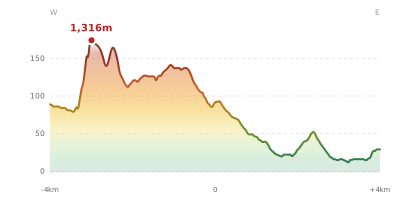
The east–west elevation profile of Monte Olivia (1316m) in the Patagonian Andes shows the terrain cross-section through the summit at 1,316m. The color gradient transitions from green (valley floor) to white (summit zone), with the red summit marker indicating the peak.
Frequently Asked Questions
The contour map uses a hypsometric color scale where green represents lower elevations, yellow and orange indicate mid-range altitudes, and white marks the highest zones near the summit. Thicker contour lines (index contours) are drawn at wider intervals to help you quickly estimate elevation.
The contour map of Monte Olivia (1316m) uses a 25m contour interval. This means each line represents a 25m change in elevation. Closely spaced contours indicate steeper terrain, while widely spaced contours show gentler slopes.
The elevation profile is a cross-section through Monte Olivia (1316m) from west to east, passing through the summit at 1,316m. It reveals the mountain's shape, steepness, and relative height compared to the surrounding terrain. The horizontal axis shows distance in kilometers from the peak.
Monte Olivia (1316m) was formed by tectonic folding, which compressed rock layers into long, parallel ridges. The contour map shows elongated lines that follow the axis of the fold, rather than circular patterns.