Amnye Machen (6282m)
Embed This Widget
Add the script tag and a data attribute to embed this widget.
Embed via iframe for maximum compatibility.
<iframe src="https://mountainfyi.com/iframe/entity//" width="420" height="400" frameborder="0" style="border:0;border-radius:10px;max-width:100%" loading="lazy"></iframe>Paste this URL in WordPress, Medium, or any oEmbed-compatible platform.
https://mountainfyi.com/entity//Add a dynamic SVG badge to your README or docs.
[](https://mountainfyi.com/entity//)Use the native HTML custom element.
Amnye Machen位于China,海拔6282米, Asia. 该山峰被归类为Fold Mountain。

海拔对比
关于这座山
Amnye Machen (6282m) is a fold mountain in China. Grade 4/5: technical ascent requiring mountaineering skills. A challenging Himalayan objective offering remote wilderness and high-altitude climbing.
路线
季节山况
地形分析
等高线地图
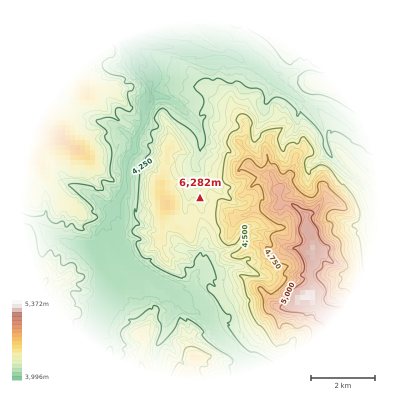
The topographic contour map of Amnye Machen (6282m) shows elongated parallel contours following the ridge axis. Contour lines are drawn at 100m intervals, with index contours (thicker lines) every 500m. The hypsometric color scale ranges from green (lower elevations) through yellow and orange to white (highest elevations near the 6,282m summit). Above 3,800m, the estimated snow line at this latitude, contours transition to cooler tones indicating permanent snow and ice.
海拔剖面
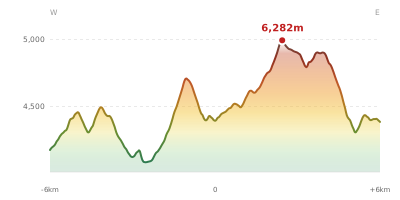
The east–west elevation profile of Amnye Machen (6282m) shows the terrain cross-section through the summit at 6,282m. The color gradient transitions from green (valley floor) to white (summit zone), with the red summit marker indicating the peak. The dashed blue snow line at 3,800m marks the approximate elevation above which permanent snow persists year-round.