Nanga Parbat (8126m)
5Nanga Parbat se alza a 8126 metros en Pakistan, parte de Himalayas, Asia. Este pico se clasifica como Fold Mountain.
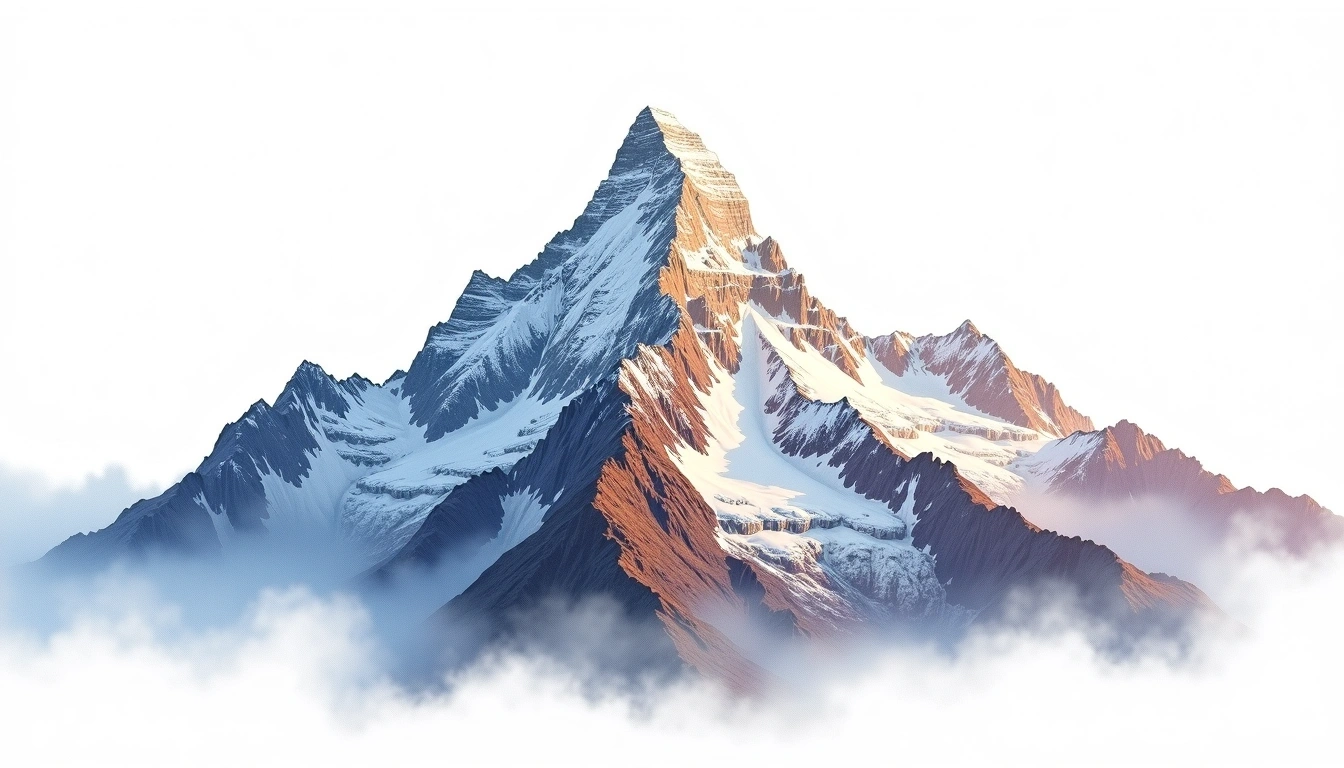
Nanga Parbat, the ninth-highest mountain in the world at 8,126 metres, marks the western anchor of the Himalaya in northern Pakistan, where the range drops abruptly toward the Indus River. Its southern Rupal Face rises roughly 4,600 metres from base to summit, the highest mountain face on Earth. The peak is a fold mountain thrust up along the Himalayan front. The site rates it grade 5, its most severe tier, and a long record of avalanches and storms on its enormous faces earned it the grim epithet “Killer Mountain” during the early attempts of the twentieth century. It stands in isolation at the range's far northwestern limit.
On this page
Comparación de altitudes
Sobre esta montaña
Nanga Parbat (8126m) is a fold mountain in the Himalayas, Pakistan. Grade 5/5: extreme expedition where supplemental oxygen is typically required. Nanga Parbat's Rupal Face is the highest mountain face on Earth at roughly 4,600m.
Rutas
Condiciones estacionales
Análisis topográfico
Mapa de contorno
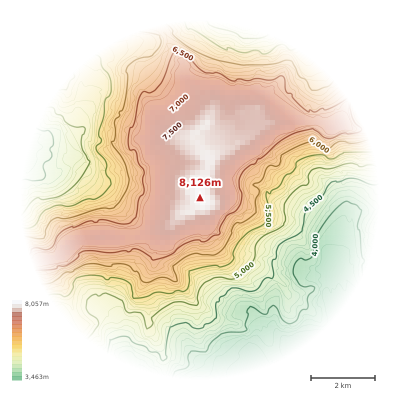
The topographic contour map of Nanga Parbat (8126m) in the Himalayas shows elongated parallel contours following the ridge axis. Contour lines are drawn at 100m intervals, with index contours (thicker lines) every 500m. The hypsometric color scale ranges from green (lower elevations) through yellow and orange to white (highest elevations near the 8,126m summit). Above 3,800m, the estimated snow line at this latitude, contours transition to cooler tones indicating permanent snow and ice.
Perfil de elevación
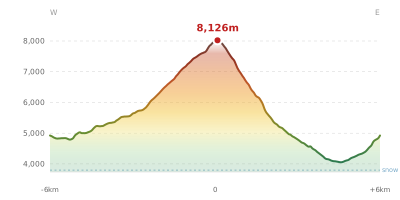
The east–west elevation profile of Nanga Parbat (8126m) in the Himalayas shows the terrain cross-section through the summit at 8,126m. The color gradient transitions from green (valley floor) to white (summit zone), with the red summit marker indicating the peak. The dashed blue snow line at 3,800m marks the approximate elevation above which permanent snow persists year-round.