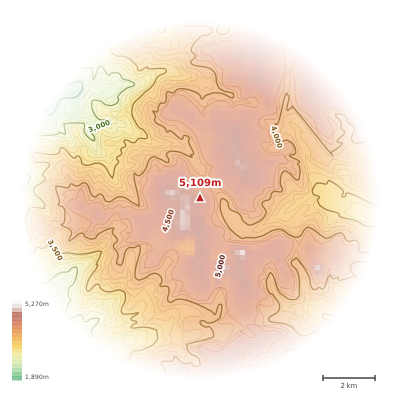
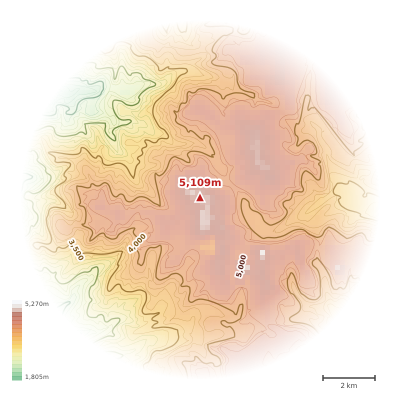
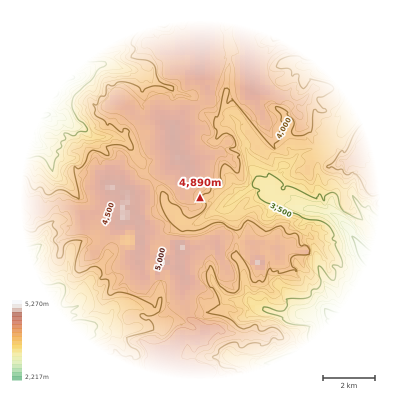
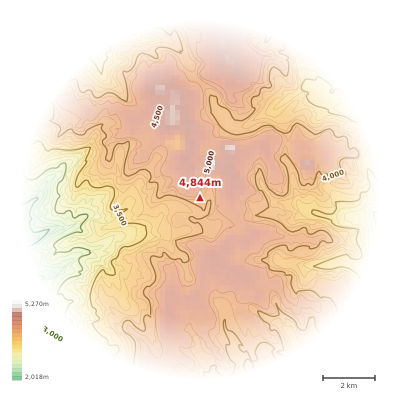
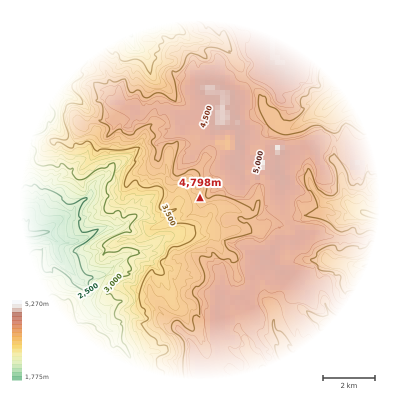
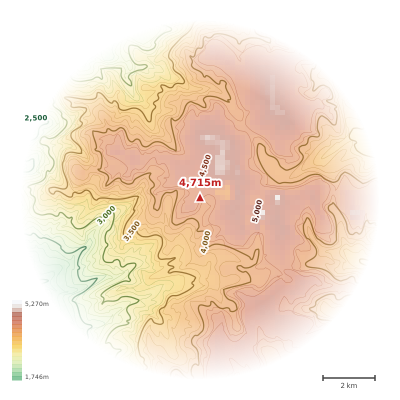
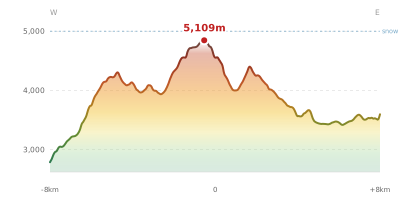
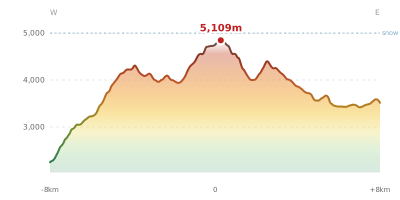
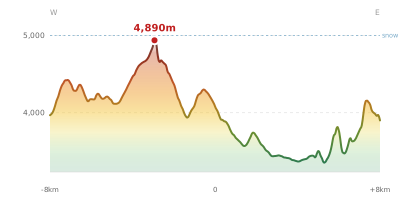
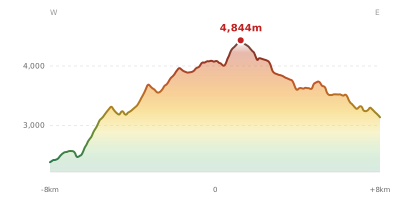
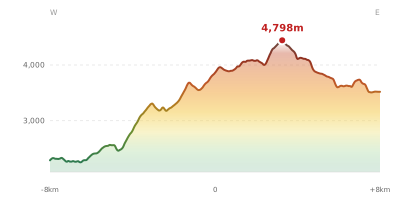
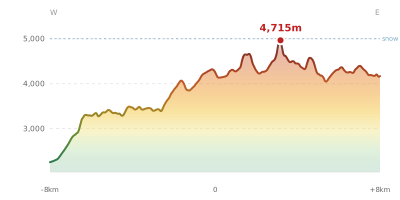
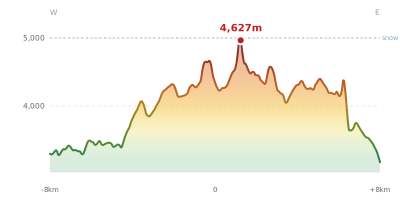
The Rwenzori Mountains straddle the Uganda-DR Congo border, rising to 5,109m at Margherita Peak. Permanently glaciated despite their equatorial location, the range is being dramatically affected by climate change. The extraordinary afroalpine vegetation zones—giant heather, lobelias, and groundsels—are unlike anywhere on Earth.
A mountain range is a series of mountains connected by high ground, typically formed by the same geological processes. Ranges are usually part of a larger mountain system or belt. For example, the Himalayas form the world's highest range, containing over 100 peaks above 7,200 meters.
Mountains within a range share geological origins (tectonic plate collision, volcanic activity, or continental rifting), similar rock types, and often similar flora and fauna at equivalent elevations. They are connected by ridgelines and separated by passes or cols.
A mountain range is an elongated chain of peaks, while a massif is a compact group of connected mountains forming an independent mass. For example, the Mont Blanc massif is a distinct group within the larger Alps range. A massif often has a single dominant summit.
The Andes is the longest continental mountain range, stretching approximately 7,000 km along the western coast of South America through seven countries. If mid-ocean ridges are included, the Mid-Atlantic Ridge at ~16,000 km is the longest mountain range on Earth.
Mountain ranges create rain shadows by forcing moist air upward, causing precipitation on the windward side and dry conditions on the leeward side. They also channel wind patterns, create microclimates, and influence regional temperature and precipitation patterns across large areas.